


Why Exercise Selection Matters: Matching the Right Movement to the Right Client

Two clients can walk into a training session with similar fitness goals and need very different exercise programs. Their movement abilities, training histories, physical limitations, and responses to exercise may all influence which movements are appropriate.
That's why effective exercise programming involves more than selecting exercises from a familiar list. For personal trainers, strength coaches, and other fitness professionals, the ability to explain why an exercise belongs in a program is an important professional skill.
A Good Exercise Isn't Automatically the Right Exercise
Squats, lunges, presses, and rows are widely used because they can help develop strength and movement capacity. But even a well-established exercise may need to be modified, progressed, or replaced depending on the individual performing it.
Consider a client who struggles to maintain control during a particular movement. Adding more repetitions or increasing resistance may not address the underlying challenge, while adjusting the exercise setup or selecting a different variation could provide a more appropriate training opportunity.
The objective isn't to find one universally perfect exercise. It's to understand the demands of a movement and determine whether those demands match the client's current capabilities and goals.
Look Beyond the Exercise Name
When evaluating an exercise, fitness professionals should consider several questions:
What physical qualities or movement abilities is this exercise intended to develop?
Which joints and muscle groups are involved, and what demands does the movement place on them?
Can the client perform the exercise with appropriate control?
Is the difficulty level suitable for the client's current abilities?
How will the exercise be modified or progressed as the client adapts?
These questions encourage a more deliberate approach to programming rather than relying exclusively on habit, popularity, or personal preference.
Understanding Movement Creates More Options
A deeper knowledge of functional anatomy, biomechanics, and exercise progression can help professionals recognize why a client is struggling and identify practical alternatives. Instead of repeatedly cueing the same movement without improvement, a trainer may be able to adjust the position, resistance, range of motion, or exercise variation.
This kind of decision-making becomes especially valuable when working with clients whose abilities change over time.
Programs need to respond to actual performance and progress, not simply follow a predetermined sequence of exercises.
Build Your Professional Reasoning Skills
At Pinnacle Training & Consulting Systems (PTCS), our continuing education programs help fitness and allied health professionals strengthen their understanding of human movement and apply that knowledge in practice.
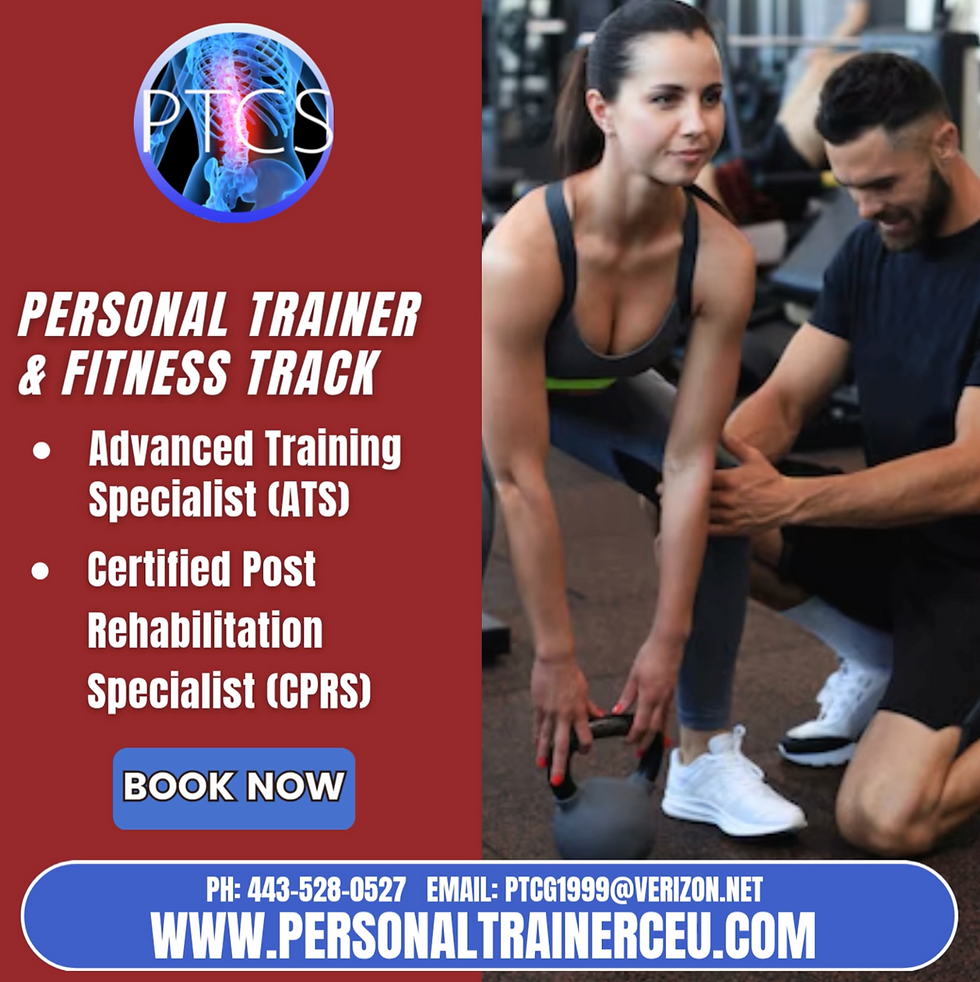
Through educational opportunities such as our Advanced Training Specialist (ATS) and Certified Post Rehabilitation Specialist (CPRS) programs, professionals can expand their knowledge of exercise programming, functional movement, and individualized training approaches.
The more you understand about how and why an exercise works, the better equipped you are to make thoughtful programming decisions for the people you serve.
Explore our continuing education opportunities and take the next step in your professional development.
Pinnacle Training & Consulting Systems
Phone: 443-528-0527
Email: ptcg1999@verizon.net


Comments